Showing posts with label architectural history. Show all posts

Monday, October 10, 2016

Lecture by Jonathan Hill 'A Landscape of Architecture, History and Fiction' 18:30, 19 October 2016


18:30 - 20:00 19 October 2016

A Landscape of Architecture, History and Fiction

Architecture can be analogous to a history, a fiction, and a landscape. We expect a history or a novel to be written in words, but they can also be cast in concrete or seeded in soil. The catalyst to this tradition was the simultaneous and interdependent emergence in the eighteenth century of new art forms: the picturesque landscape, the analytical history, and the English novel. Each of them instigated a creative and questioning response to empiricism’s detailed investigation of subjective experience and the natural world, and together they stimulated a design practice and lyrical environmentalism that profoundly influenced subsequent centuries.

Associating the changing natural world with journeys in self-understanding, and the design process with a visual and spatial autobiography, this lecture analyses an enduring and evolving tradition from the picturesque and romanticism to modernism. Creative architects have often looked to the past to understand the present and imagine the future. Twenty-first-century architects need to appreciate the shock of the old as well as the shock of the new.

Location: UCL Campus, Darwin Lecture Theatre, Gower St, London WC1E 6XA

more info here.

Wednesday, March 16, 2016

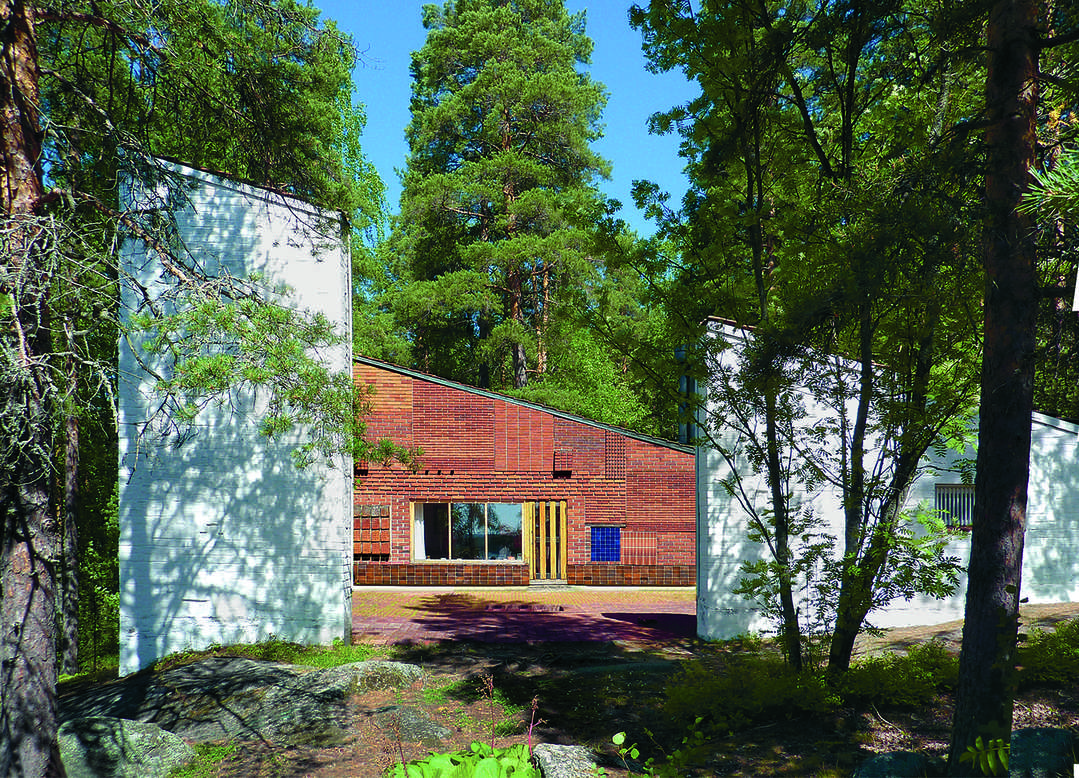
Architectural Details: Elissa and Alvar Aalto’s Patchwork Wall of Bricks


"Aalto’s idiosyncratic courtyard walls are this building’s defining feature, and form a beautiful example of how a unique architectural language can be produced by deviating from conventional construction techniques. The walls are composed of a patchwork of different brick patterns, forming a collage of texture and color that evokes the patina of the surrounding forest."

more at architizer.

Saturday, February 27, 2016

Robin Evans Memorial Series Inaugural Lecture Thursday 3 March 2016

Robin Evans, “Projection and its analogues: The Arrested Image,” 1995

Robin Evans Memorial Series Inaugural Lecture: About Bob Evans

This free event reflects on, commemorates and celebrates the life, work and influence of Bob Evans, the architect and educator.
A Senior Lecturer at University of Westminster between 1986 and 1993, Bob Evans was much loved by his colleagues and students, and used his penetrating intellect and brilliantly creative mind to enlighten at every level and promote enthusiasm and optimism in the field of architecture. Evans lectured widely at world renowned institutions including Harvard, Cambridge and the Architectural Association and his many essays and reviews were regularly published in journals such as Casa BellaArchitectural Review and AA Quarterly. Bob Evans died suddenly at his home in 1993, tragically young and at a moment when his career promised so much more.
This event is open to current and former students and staff and members of the public. Please extend this invitation to those who may be interested.

When: 6pm (5.30pm doors), Thursday 3 March 2016.

Where: Robin Evans Room, 35 Marylebone Road, London.
Book: This event is free, but please register your place online. Book Now.

Talk synopsis: This first lecture, in what is to become an annual series, will focus on the life and work of Bob Evans and his exploration of the world of ideas in architecture from the perspective of those who were influenced by him, his former students and colleagues. 
Welcome, and Introductions 
  • Harry Charrington and Katharine Heron,  Faculty of Architecture & the Built Environment, University of Westminster
Confirmed Speakers: 
  • Professor Anne Boddington, Dean of Arts & Humanities, University of Brighton
  • Dr John Bold, Reader, University of Westminster
  • Richard Difford, Senior Lecturer, Department of Architecture, University of Westminster
  • Joseph Ryqwert CBE, RIBA gold Medallist, Professor Emeritus University of Pennsylvania.
  • Fred Scott, Fellow Teacher

This event will be followed by a chance to network with students, staff and alumni over a glass of wine. 

Monday, December 7, 2015

The World of Charles and Ray Eames at the Barbican until 14 February


The World of Charles and Ray Eames

21 October 2015 - 14 February 2016

Charles and Ray Eames are among the most influential designers of the 20th century. Enthusiastic and tireless experimenters, this husband and wife duo moved fluidly between the fields of photography, film, architecture, exhibition-making, and furniture and product design.

at the Art Gallery 
Barbican Centre
Silk Street London 
EC2Y 8DS

Friday, November 20, 2015

The Byzantine Fresco Chapel by François de Menil


"The Byzantine Fresco Chapel is a part of the Menil Collection in Houston, Texas designed by architect François de Menil. The suspended-glass "walls" are not replicas of the chapel that the frescoes were removed from, but created a new context for displaying the icons. In order not to simply replicate the original chapel, de Menil designed "a mediating external building with an embedded steel structure – a 'reliquary box' – which forms a neutral enclosure for a freestanding chapel," according to Christine Slessor in The Architectural Review."

The Tempietto by Donato Bramante, 1502


"Βramante’s Tempietto  sits on the Janiculum Hill (Gianicolo) in Rome, a small temple incorporated into the larger project of San Pietro in Montorio. Currently, the temple occupies a quadrilateral courtyard and is only visible to the public from a single, fixed, exterior point. However... the Tempietto was intended to be viewed from all sides, surrounded by an additional ring of columns, ultimately creating a series of concentric circular boundaries. The interiority of the Tempietto is placed in contrast to the seeming exteriority of the courtyard, only to be made interior again by the surrounding building." -Michael Vlasopoulos


left: section of the building, right: Harvard University team's reconstruction of the building's intended courtyard.

more here.


Friday, June 19, 2015

'Everything is Architecture' Discussion on Fri 19 June, 1pm at the ICA


"With the spotlight on architecture as the London Festival of Architecture takes over the capital this month and we look ahead to our forthcoming display Everything is Architecture: Bau Magazine from the 60s and 70s (opening 28 July), our Culture Now series looks to architectural practice.

In light of the upcoming display Everything is Architecture: Bau Magazine from the 60s and 70s, this talk serves as a precursory investigation into the little-known Austrian magazine Bau, co-edited between 1965 and 1970 by Hans Hollein, Walter Pichler, Günther Feuerstein and others.

Part of the London Festival of Architecture, for this event, Prof. Murray Fraser will chair a discussion with Peter Cook and architectural historian (and occasional visiting critic for BAIA) Dr. Eva Branscome."

Fri 19 Jun, 1pm

ICA
The Mall
London, London SW1Y 5AH
United Kingdom

Wednesday, April 29, 2015

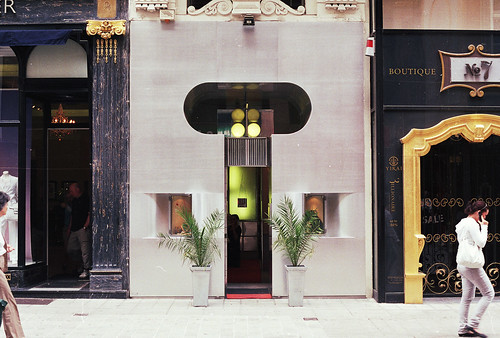
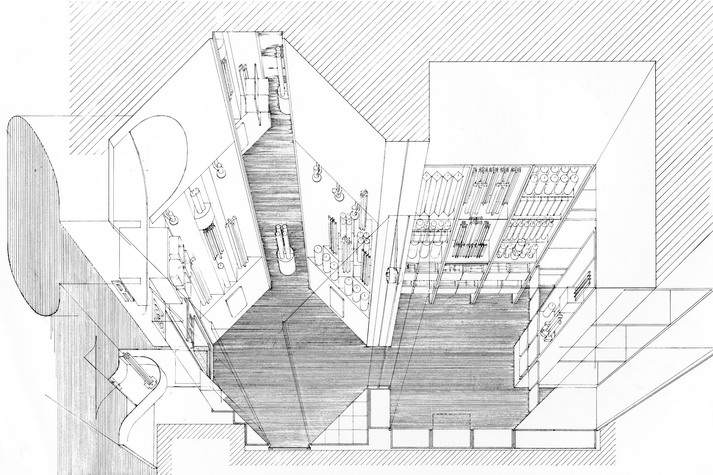
The Retti Candle Shop by Hans Hollein (1966)


In 1966, Hans Hollein  designed  the Retti candle shop for a site just 12ft wide. "...designed like a sparkling aluminium jewellery box, with a grand triumphal entrance in the shape of a cartoonish ionic column punched through its metallic facade, framed by glazed display windows on either side, (it) pulled out at angles towards the street. This thin curtain of aluminium continued within, forming a reflective backdrop to displays of candles, arranged like grand organ pipes beneath bespoke globe light fittings."
from the guardian.
more here.

Friday, September 26, 2014

Philibert de l'Orme's "The bad and good architect", 1567


French architect Philibert de l'Orme was one of the great masters of the French Renaissance. In the final pages of his treatise Le premier tome de l’architecture of 1567 he featured two illustrations entitled "The bad and good architect."  The illustrations serve as a manifesto and communicate the ideals of their author.

"Whereas the bad architect wanders in a barren landscape dominated by a gloomy medieval castle, the good architect enjoys the pleasures of the garden.  Beautiful buildings rise on each side, their ornaments echoing the productions of nature.... Revealingly, in addition to lacking hands because he does not know how to make something useful, the bad architect has no recognisable features; he is deprived of eyes, nose, mouth and ears, whereas the good architect has a visage.  The latter is moreover, engaged in a dialogue with a young disiciple who turns his face towards him.  With their windows wide open like eyes surveying the scene, the nearby buildings seem to look on this conversation with benevolence."
-from Ornament: The Politics of Architecture and Subjectivity by Antoine Picon

Saturday, March 29, 2014

'Ruin Lust' at Tate Britain, 4 March-18 May 2014

Ruin Lust
Tate Britain
4 March – 18 May 2014
Adult £11.00 (without donation £10.00)
Concession £9.50 (without donation £8.60)

Ruin Lust, an exhibition at Tate Britain from 4 March 2014, offers a guide to the mournful, thrilling, comic and perverse uses of ruins in art from the seventeenth century to the present day. The exhibition is the widest-ranging on the subject to date and includes over 100 works by artists such as J.M.W. Turner, John Constable, John Martin, Eduardo Paolozzi, Rachel Whiteread and Tacita Dean.

Saturday, March 8, 2014

Sections by Antoine Desgodetz (drawn in 1682)


Antoine Desgodetz studied under François Blondel at the Academy of Architecture in Paris between 1672 and 1674, and was then dispatched to Rome by Louis XIV’s minister, Colbert, in order to study ancient buildings. The result was a book, Ancient Edifices of Rome, dedicated to Colbert and published at the king’s expense. Composed of accurate drawings of Rome’s main ancient buildings (as well as the amphitheater in Verona) accompanied by commentaries, the goal of the book was to provide the first precise description of ancient Roman architecture, thereby correcting errors committed by the likes of Andrea Palladio, Sebastiano Serlio, and Antonio Labacco. It remained an authoritative reference work on ancient architecture until the end of the 18th century.


Thursday, February 13, 2014

Alvar Aalto: Technology and Nature


Clay Thompson forwarded this link to a documentary on Alvar Aalto.

Watch it on Ubu Web.

Wednesday, January 22, 2014

New book: 'Bathroom' by Barbara Penner


Bathroom charts the evolution of the bathroom and the habits and lifestyles to which it gave rise. It shows how and why the bathroom emerged and how it became an international symbol of key modern values, such as cleanliness, order and progress. The modern bathroom, its technologies and its customs have been exported globally through colonialism, the media, fashion, world expositions and tourism. Barbara Penner explores the conflicts this process has caused, as well as discussing more user-friendly and low-tech alternatives, which are set to become ever more relevant in our environmentally conscious age.

Abundantly illustrated, Bathroom examines examples from history and from across the globe. From squat to high-tech bidet toilets, and from cast-iron bathtubs to monsoon showers, this is an original and eye-opening study of a significant but often overlooked space.

from Reaktion.

Wednesday, December 18, 2013

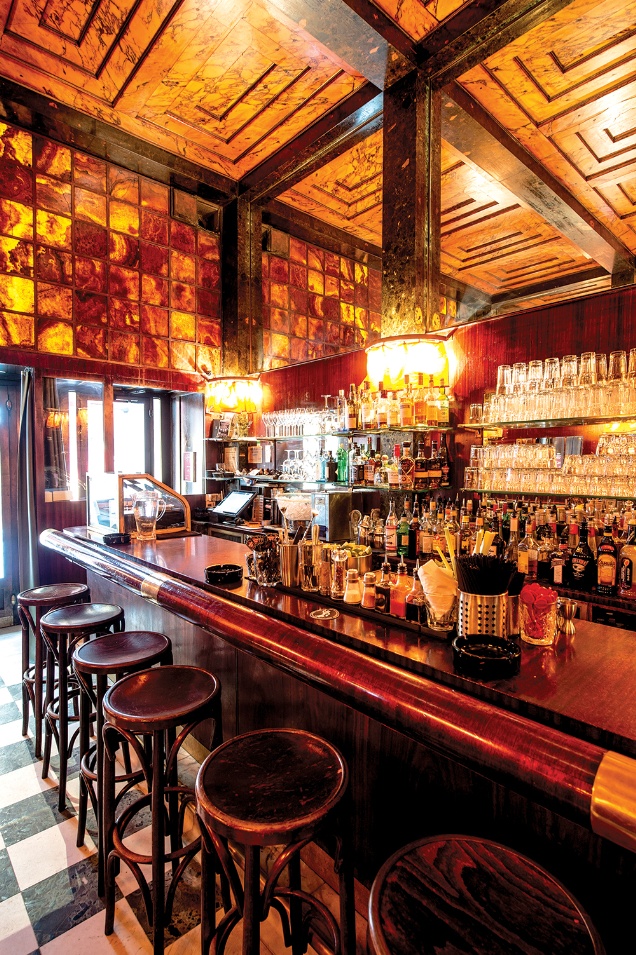
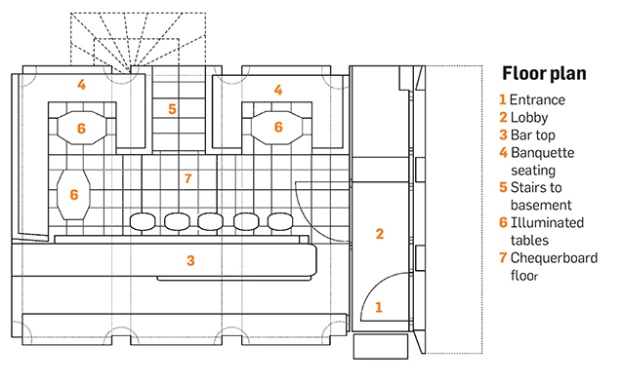
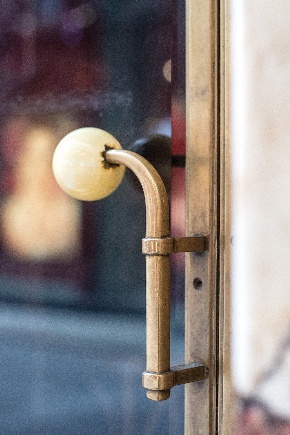
Sean Griffiths on the American Bar in Vienna by Adolf Loos


"The American Bar is an astonishing interior.

As well as being a very radical piece of early 20th century design, as Europe’s first ever cocktail bar (cocktails are an American invention) it brought a decadent New World experience to an old imperial Europe on the verge of catastrophic dissolution."

More from Sean Griffiths at BD.


Thanks to Níall McLaughlin for mentioning the article.

Friday, August 9, 2013

Saturday, March 9, 2013

The design genius of Charles + Ray Eames


The legendary design team Charles and Ray Eames made films, houses and classic midcentury modern furniture. Eames Demetrios, their grandson, shows rarely seen films and archival footage in a lively, loving tribute to their creative process. Demetrios also talks about how his own work has been influenced by his grandparents’ legacy.

From the TED blog.

Friday, January 25, 2013

Colònia Güell by Antoni Gaudí

Courtesy of Samuel Ludwig
Colònia Güell was a workers’ colony located in , presently a town of around 7,000 inhabitants 20km outside Barcelona. The area was a manufacturing suburb that grew rapidly around the turn of the 20th century. In 1898, Antoni Gaudi was commissioned by Count Eusebi de Güell, who wanted to provide a place of worship for the booming suburb, to build a Church.


Through the construction process of Colònia Güell, Gaudi is said to have experimented with an array of techniques and architectonic details, many of which would later be used in his famous tour-de-force, the Sagrada Familia in Barcelona.
Courtesy of Samuel Ludwig
Brick and mosaics dominate the structure, used in an extraordinary way. The form of the building is anything but traditional, perhaps a by-product of the breath taking spaces, both interior and exterior. The crypt is magnificently articulated, changes in materiality carefully calculated and light sensitively controlled. Different bricks and stones are used for the structure, meeting at carefully detailed joints, and perhaps filling in different structural roles.
from archdaily

Tuesday, December 6, 2011

Mixing the Ingredients: A Lecture by Peter Cook


For those of your struggling to craft your plans, take 65 minutes to watch this lecture by Peter Cook.  He describes the different approaches to designing in plan taken by many notable modern and contemporary architects.  

http://www.aaschool.ac.uk//VIDEO/lecture.php?ID=1360