Tuesday, January 29, 2013

Friday at Tate Britain: Performing Architecture


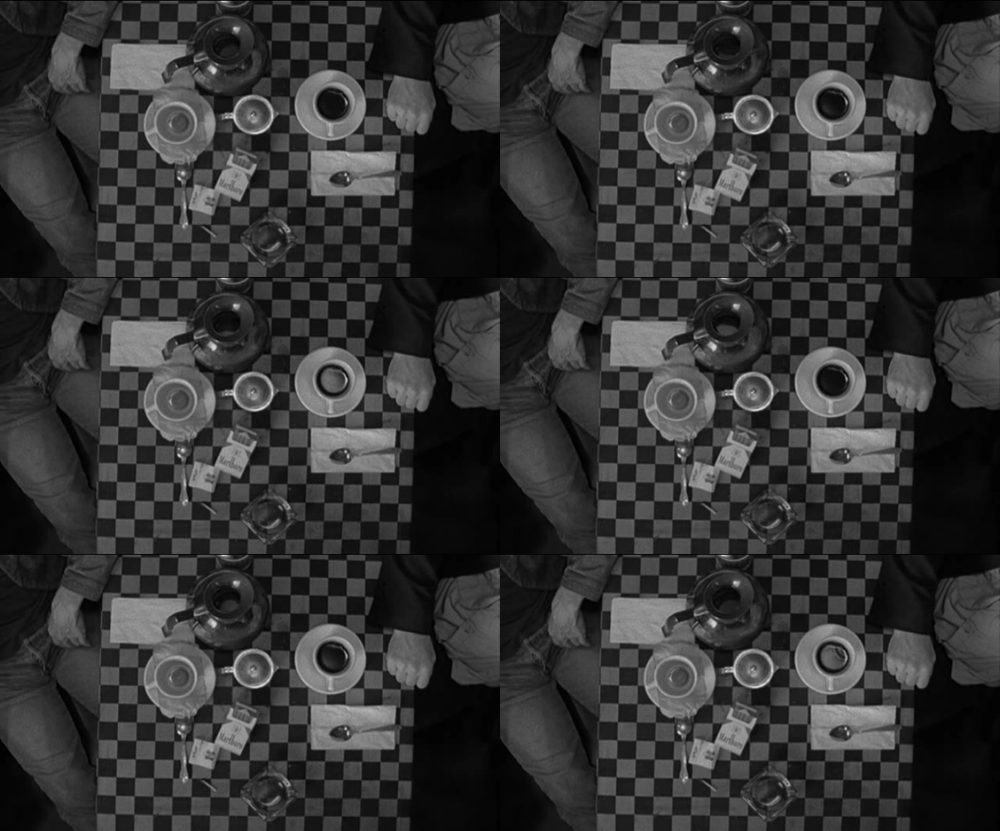
Alex Schweder and Ward Shelly, Stability, Seattle, 2009 Photos 
© Scott Lawrimore, edited by Ward Shelly & author.

What does performance have to do with architecture? 
How can a building perform, and how can we perform a building?

Come on a playful journey through the gallery in its current phase of spatial and structural transformation, taking a look at architectural and art practices that explore how our physical bodies interact with built form.
With talks, performance, a workshop, and sound and film from Alex Schwederand Lamis BayarKreider + O’Leary, Effie Coe, Emptyset and The Architecture Foundation
*Late at Tate Britain: February 2013
Performing Architecture*
Friday 1 February, 18:00 - 22:00
Tate Britain

more details here.

Friday, January 25, 2013

How to Build Animated GIFs in Photoshop


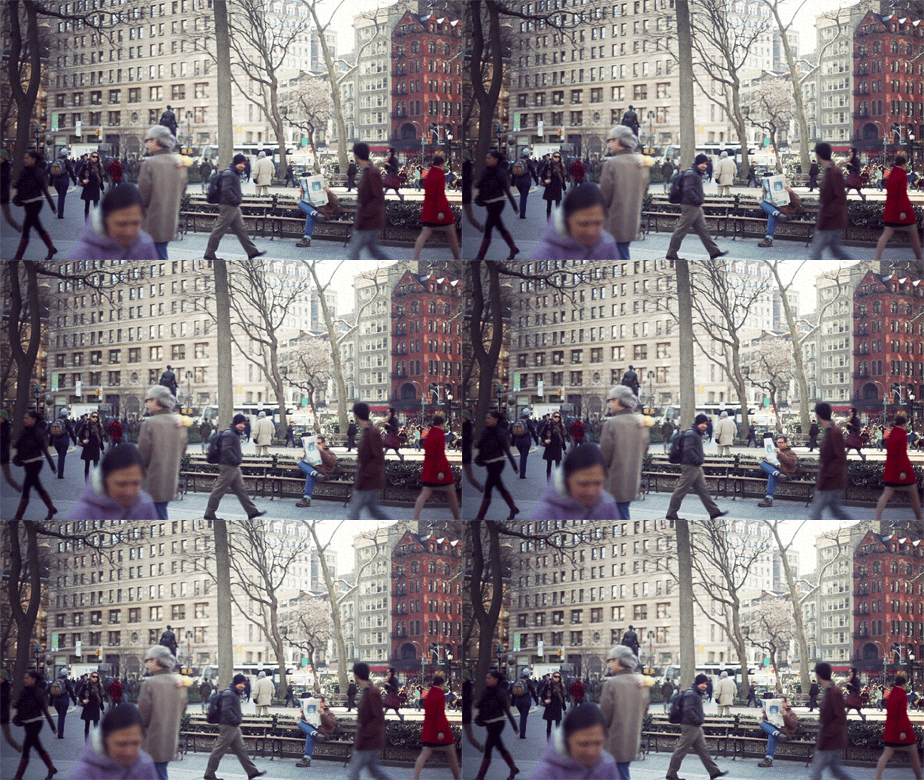
Second Year Students working on your blog posts: Here is a simple tutorial on how to create animated GIFs in Photoshop,  with some example files you can download and try out: 

Colònia Güell by Antoni Gaudí

Courtesy of Samuel Ludwig
Colònia Güell was a workers’ colony located in , presently a town of around 7,000 inhabitants 20km outside Barcelona. The area was a manufacturing suburb that grew rapidly around the turn of the 20th century. In 1898, Antoni Gaudi was commissioned by Count Eusebi de Güell, who wanted to provide a place of worship for the booming suburb, to build a Church.


Through the construction process of Colònia Güell, Gaudi is said to have experimented with an array of techniques and architectonic details, many of which would later be used in his famous tour-de-force, the Sagrada Familia in Barcelona.
Courtesy of Samuel Ludwig
Brick and mosaics dominate the structure, used in an extraordinary way. The form of the building is anything but traditional, perhaps a by-product of the breath taking spaces, both interior and exterior. The crypt is magnificently articulated, changes in materiality carefully calculated and light sensitively controlled. Different bricks and stones are used for the structure, meeting at carefully detailed joints, and perhaps filling in different structural roles.
from archdaily

Thursday, January 24, 2013

KOWLOON WALLED CITY CROSS SECTION

At one time, one of the most densely populated areas on Earth, Kowloon, was a walled city within Hong Kong. It was unregulated by the then-ruling British authorities, who reluctantly allowed it as the only Chinese settlement. It was a no man’s land because of this; run by the Chinese mafia and filled with brothels, sweat shops, illegal hospitals, and trashy eateries.
Originally, Kowloon was built as a watchpost for guards who would protect the area from pirates. But as the population grew–from 10,000 in 1971 to a staggering 50,000 in 1990–attempts were made by the government to evict the squatters living in the city. In 1992, the governent succeded in evicting the population and, in 1993, the 15 story tall block of buildings was torn down. Today, a park with tennis courts covers the area.
Below you will find a highly detailed cross section of the city, drawn by a Japanese team, just before it was torn down. They were obviously having fun drawing and added many hidden gems of city life. See the image full size by clicking here.


 original POST BY PAUL CARIDAD FROM THE VISUAL NEWS

Sunday, January 20, 2013

Mapping- 'The World Redrawn by the 5 Senses'

The Secrets of Grand Central


Sam Roberts goes behind the scenes at Manhattan's Grand Central Terminal. The impressive interior space holds many intriguing and fantastic design elements.

Friday, January 18, 2013

Still Lives

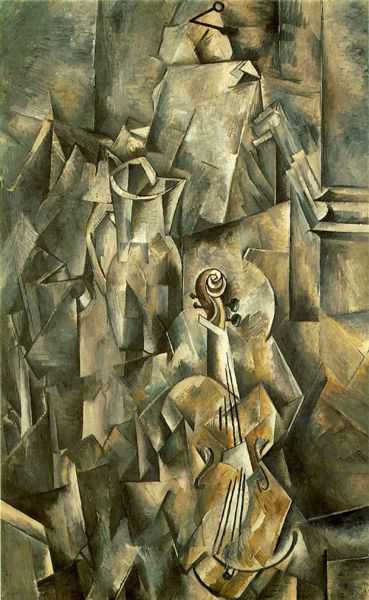
For the 1st and 2nd Year Students, a few references to get you started in thinking about the 'Still Life' that your group is constructing from your 123D scanned objects:

Ensemble by Jiri Kolar

Vanitas Still Life, by Pieter Claesz, 1630

“Madame, la table est dressée”, by Le Corbusier, 1961


 painting by Audrey Flack

'Violin and Jug', by Georges Braque,1910 

Still Life by Giorgio Morandi

Vyhnani z pekla by Jiri Kolar

Wednesday, January 16, 2013

The 3D Printing Revolution

"Though it’s been used by industrial designers to create prototypes for decades, the process of rapid prototyping has only recently begun to benefit the masses...These are just a few of the ways in which we’re seeing 3D printing entering into our daily lives and addressing our practical needs, while giving us a new creative outlet through which we can create any 3D shape imaginable."

Tuesday, January 15, 2013

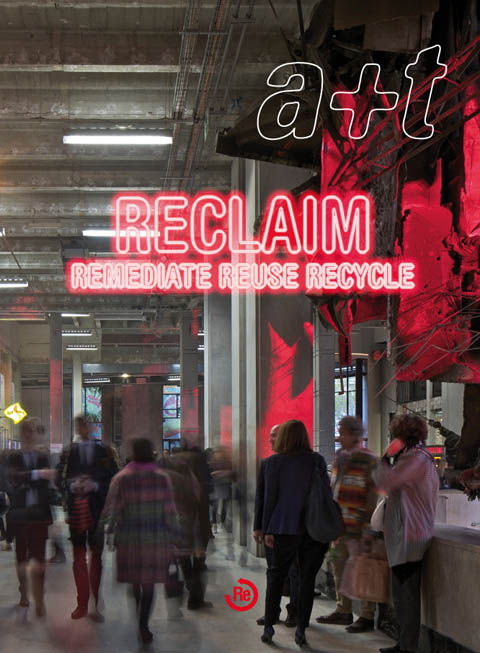
New Issue of a + t: RECLAIM


It publishes a+t magazine - whose issues are edited in thematic series - and books on collective housing and public space.  With this start to the Reclaim series, a+t interprets the works analysed and organizes its discourse on the basis of Re- actions, using these actions to create a body of knowledge applicable to any project.
Reclaim has the environmental sense to reclaim the territory, the objects, the infrastructures and the materials yet it also is a call to reclaim dignity and citizen rights. It is a wake-up call to morally reclaim society using theRe- processes as atonement.

Remediate Reuse Recycle interprets and compares actions extracted from the projects and classifies them into three Re-processes:

Remediate: acting on the territory
Reuse: acting on the building
Recycle: acting on the material

more info at a+t

Wednesday, December 19, 2012

Yokohama Apartments by ON design partners

Yokohama apartment is a residential complex consisting of semi public courtyard canopied by four one-room units for young artists. The semi public courtyard is a place for exhibition and work. 


photos © Koichi Torimura

more at archdaily

Tuesday, December 18, 2012

Antony Gormley: 'Model' at White Cube


28 November 2012 – 10 February 2013

White Cube Bermondsey
144 – 152 Bermondsey Street
London SE1 3TQ


White Cube Bermondsey is pleased to present ‘Model’, an exhibition of major new works by Antony Gormley. Challenging the physical possibilities of the gallery space, this ambitious exhibition investigates our experience of architecture through the body and of the body through architecture.


Interior Urbanism Florence 2013 Poster

more information on this summer's workshop can be found here.