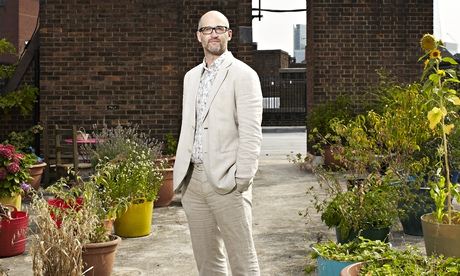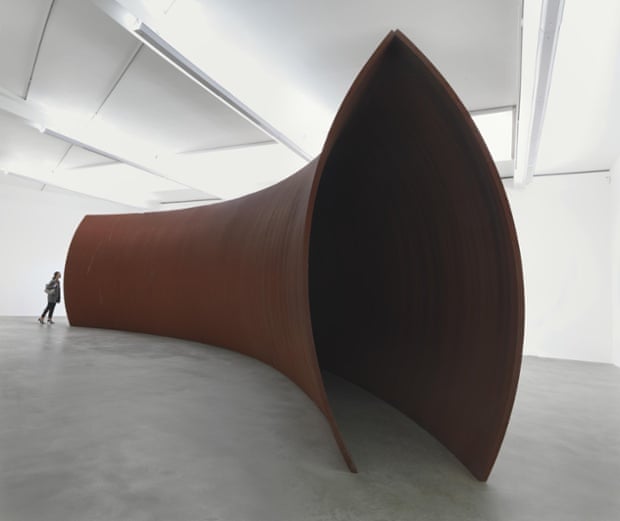
"An ensemble of four very different works, with a room devoted to each, fills Gagosian in London, in Richard Serra’s first show of sculpture here since 2008. The sum is bigger than the parts, though each work is satisfying in its own way, and each is worth the trip alone. 'I wanted to make a show with different aspects of compression and circulation, intervals and elevation, different ways to approach a field or a space or a context,' the 74-year-old artist tells me, speaking from New York." (from the gaurdian)
A collection of sources, precedents, ideas, information, images, projects, and events to inspire and provoke University of Westminster Interior Architecture students.
Saturday, October 11, 2014
Richard Serra show at Gagosian Gallery, 11 Oct to 28 Feb 2015
Labels:
art,
art gallery,
exhibitions,
installation
Tuesday, October 7, 2014
Collages by Frank Dresme
"Project 360U+00B0 was a thesis project produced at The Utrecht School of Arts in 2007. The project, was vested in the production of four psychogeographic maps. These maps are the routes between personal destinations in Amsterdam."
more here.
Labels:
collage,
interior urbanism,
landscape,
mapping,
maps,
site,
student work,
urban design
Tuesday, September 30, 2014
CJ Lim lecture: 'Food Cities', 1 Oct 2014
CJ Lim
Food City: Lecture and Book Launch.
01 Oct 2014
6.30pm – 8pm
No booking required / first come, first seated
Darwin Lecture Theatre
Map
01 Oct 2014
6.30pm – 8pm
No booking required / first come, first seated
Darwin Lecture Theatre
Map
Food City, the follow up to Smartcities and Eco-Warriors, explores the issue of urban and architectural transformation and how the creation, storage and distribution of food has been, and can again become, a construct for the practice of everyday life.
Labels:
bartlett,
cj lim,
lectures,
urban design
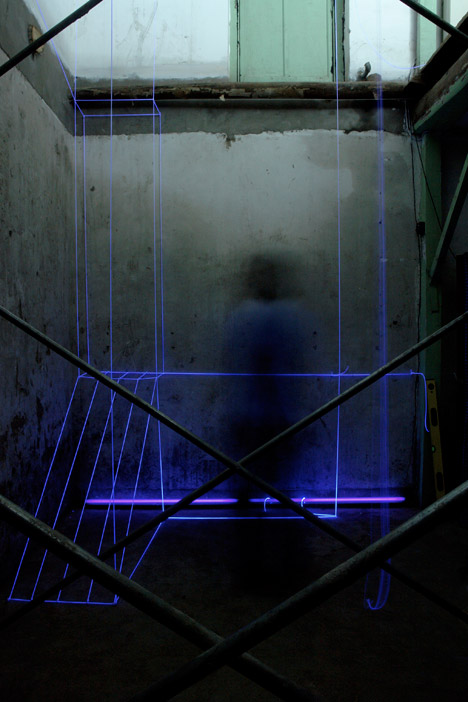
ReMIX outlines house renovation plans with UV installation
"Beijing architecture firm reMIX Studio has literally outlined its plans for the renovation of an ancient hutong residence by marking proposed structures with illuminated white strings
ReMIX is in the process of overhauling the interior of an old building in the Dashilar hutong, where a lot of regeneration work is being undertaken.
However, the architects knew early on the project would not be completed to show visitors to the area during the city's annual design week, so came up with an alternative presentation.
"We came up with a way to visualise our plans instead," reMIX cofounder Federico Ruberto told Dezeen."
more at Dezeen,
Labels:
adaptive reuse,
colour,
installations,
renovation,
temporary designs,
tensile structure,
textiles
Monday, September 29, 2014
Friday, September 26, 2014
Philibert de l'Orme's "The bad and good architect", 1567
French architect Philibert de l'Orme was one of the great masters of the French Renaissance. In the final pages of his treatise Le premier tome de l’architecture of 1567 he featured two illustrations entitled "The bad and good architect." The illustrations serve as a manifesto and communicate the ideals of their author.
"Whereas the bad architect wanders in a barren landscape dominated by a gloomy medieval castle, the good architect enjoys the pleasures of the garden. Beautiful buildings rise on each side, their ornaments echoing the productions of nature.... Revealingly, in addition to lacking hands because he does not know how to make something useful, the bad architect has no recognisable features; he is deprived of eyes, nose, mouth and ears, whereas the good architect has a visage. The latter is moreover, engaged in a dialogue with a young disiciple who turns his face towards him. With their windows wide open like eyes surveying the scene, the nearby buildings seem to look on this conversation with benevolence."
-from Ornament: The Politics of Architecture and Subjectivity by Antoine Picon
'Disobedient Objects' at the V & A 26 July- 1 February
"From a Suffragette tea service to protest robots, this exhibition is the first to examine the powerful role of objects in movements for social change. It demonstrates how political activism drives a wealth of design ingenuity and collective creativity that defy standard definitions of art and design. Disobedient Objects focuses on the period from the late 1970s to now, a time that has brought new technologies and political challenges. On display are arts of rebellion from around the world that illuminate the role of making in grassroots movements for social change: finely woven banners; defaced currency; changing designs for barricades and blockades; political video games; an inflatable general assembly to facilitate consensus decision-making; experimental activist-bicycles; and textiles bearing witness to political murders."
at the Victoria and Albert Museum
10.00 to 17.45 daily
at the Victoria and Albert Museum
10.00 to 17.45 daily
Sunday, September 21, 2014
'Everything is made of something'
Mark Miodownik, director, The Institute of Making, University College London, and author of 'Stuff Matters'
' Materials are at the heart of every company I visit and it is hard not to conclude that although Google and Twitter may dominate technology headlines, and cosmologists may be most popular with the media, materials transformation is still what makes the world go around. Starting next week in a new series of columns for Observer Tech Monthly I am going to tell the story of stuff. Each month I will pick a different material and uncover the human needs and desires that brought it into being, and decode the materials science and engineering behind it.
..there is more to materials than the science. Those who make things all have a different understanding of the practical, emotional and sensual aspect of their materials. For instance, we know the sounds of the doors in our houses, and can distinguish between someone leaving or entering from the subtle differences in keys rattling and hinges creaking. As a child I could always tell whether it was my mother or my father coming up the stairs, from the subtle differences in the sound of the creaky stairs. These acoustic personalities of buildings are often overlooked during the design process. Carpet makes a room feel warmer but also changes the acoustic signature of the room. The clickity-clack of high heels and the party they announce are muted; the squeak of rubber tennis soles and the sport they anticipate is banished; the comforting solid thump of sensible shoes on their way to work is no longer proclaimed. Installing carpet is a kind of auditory gag, which may of course be used intentionally for that purpose such as when designers want to create a sense of intimacy and calm. It is this diversity of material knowledge that I intend to capture in these columns.'
http://www.theguardian.com/science/2014/sep/14/story-of-materials-human-civilisation-mark-miodownik
Monday, September 15, 2014
Bartlett B Pro Show 24-28 September
a celebration of the work of students from The Bartlett School of Architecture's post-professional Masters programmes.
Opening party
Tuesday 23 September, 19.00
Speeches and awards from 19.30
Exhibition open to the public
24 – 27 September 10.00 – 18.00
28 September 10.00 – 14.00
Venue
The Royal Ear Hospital
21 Capper Street, London WC1E 2QG
Front, left image: Team Filamentrics [Zeeshan Ahmed, Yichao Chen, Nan Jiang, Yiwei Wang], MArch GAD, RC4, ‘SpaceWires’, Rendering. Front, right image: Team Physa [Mingjie Fan, Shihong Sun, Nan Yang, Kai Kai Zhou], MArch UD, RC16, ‘Bio-Digital Futures, The Copper Corridor’
Tuesday, September 9, 2014
PG2014 Exhibition at University of Westminster 12-19 Sept 2014
PG2014
THE DEPARTMENT OF ARCHITECTURE INVITES YOU TO PG2014:
An exhibition of thesis projects from the MA Architecture; MA Architecture and Digital Media; MA Architecture Cultural Identity and Globalisation and MA Interior Design
PREVIEW
Friday 12 September
6 – 9pm
UNIVERSITY OF WESTMINSTER
35 Marylebone Road
London
NW1 5LS
EXHIBITION CONTINUES DAILY
Saturday 13 September
to Friday 19 September
9am – 9pm
Thursday, September 4, 2014
Chelsea College of Arts Postgraduate Summer Show 2014. 5 - 12 September 2014
Catch the Chelsea College of Arts Postgraduate Summer Show, featuring work by graduating students from the MA Interior & Spatial Design course.
Location:
Chelsea College of Arts
16 John Islip Street, London
SW1P 4JU
more info here.
Tuesday, July 1, 2014
Staircase in Mallorca by Studio Mishin Architectural Bureau
Photo: Quintin Lake Photography
"A sculptural staircase in the form of irregularly perforated copper panels is the central element of Villa Mallorca. The staircase leads over three storeys and creates a visual link to the copper details throughout the interior and exterior of the building."
Photo: Quintin Lake Photography
from DETAIL.
Labels:
folding,
interior architecture,
perforated steel,
stairs
Subscribe to:
Posts (Atom)